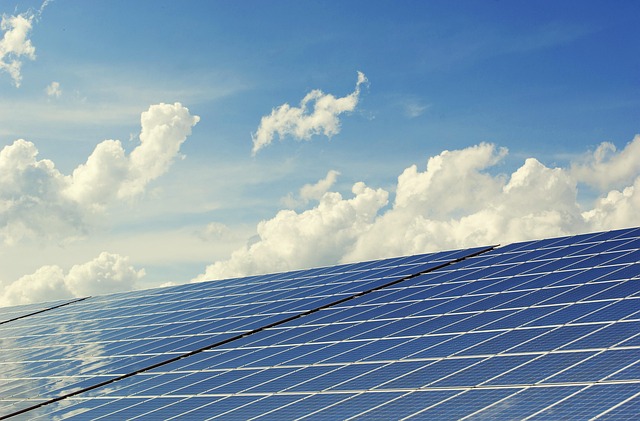
The New York Times is reporting that Chinese solar panels are now so affordable in South Africa that businesses and families are snapping them up, slashing their bills and challenging utilities.
Many have turned to affordable solar panels and batteries, largely manufactured in China, to bypass the unreliable power grid. This shift is not limited to individual homes or small offices; it spans auto factories, wineries, gold mines, shopping malls, and universities, fundamentally altering how Africa’s largest economy generates and consumes power.
This has a real impact, as some businesses literally could not operate at times due to a lack of power.
The transformation has been remarkably swift. From virtually zero in 2019, solar now accounts for approximately 10 percent of South Africa’s electricity-generating capacity, with private installations adding over seven gigawatts in the past five years—roughly a tenth of the nation’s total 55-gigawatt capacity. This “bottom-up movement,” as described by Joel Nana of Sustainable Energy Africa, allows businesses and households to sidestep a dysfunctional system plagued by expensive, unreliable, or nonexistent electricity.
This is great news, as we’re now seeing a market driven apporach to renewable energy which can have huge ramifications around the world, even at a time when enemies of renewables like Donald Trump are trying to slow down the adoption of solar and wind.
At the heart of this boom is China’s dominance in clean energy manufacturing. Over the past decade, while the U.S. emphasized fossil fuel exports, China invested heavily in renewables, producing the majority of the world’s solar panels, batteries, and electric vehicles. Oversupply has driven prices to historic lows, making solar accessible even in developing markets. Tariffs have limited Chinese exports to the U.S. and Europe, but Africa has emerged as a key destination. In the first ten months of 2025, solar imports from China to the continent surged 50 percent. South Africa led as the top importer, followed by nations like Sierra Leone and Chad, which imported equipment equivalent to half their existing generating capacity.
There are all sorts of econimic and trade implications here, but the basic reality is we’re seeing a tipping point where cost is now a huge advtantage for solar power.


